

There are many seat covers on the market, each with its own characteristics, properties, appearance, and shape. We will discuss the material features, as well as the function of each and which best suits the user's needs.
Materials and Features
In the manufacture of seat covers, fabrics such as Polyester, Cotton, Elastane, PVC, or PU are usually used as the main materials of the product. We will describe the properties of each and how each material can improve the covers.
Polyester: Durability and Strength.
- Durability: Polyester is known for its durability, resistant to wear and wrinkles.
- Strength: Excellent resistance to abrasion and external elements, making it ideal for outdoor activities.
- Quick Drying: Absorbs little moisture, allowing for quick drying.
Cotton: Comfort and Breathability.
- Comfort: Cotton is soft and comfortable, perfect for everyday wear.
- Breathability: Allows air to circulate, making it a cool and breathable option.
- Moisture Absorption: Absorbs and retains moisture, so it takes longer to dry. Easier to get dirty.
Elastane: Elasticity and Flexibility
- Elasticity: Elastane is known for its ability to stretch, providing great flexibility.
- Fit: Provides comfort and fit to garments, commonly used in sportswear.
- Shape Retention: Helps maintain the original shape of the garment.
PVC: Waterproofing and Durability
- Waterproofing: PVC is waterproof, protecting against liquids and moisture.
- Durability: Offers resistance to chemicals, oils, and abrasions.
- Weight and Rigidity: Can be heavier and stiffer compared to other fabrics, making it suitable for waterproof and durable products.
PU: Durability and Waterproofing
- Durability: PU is known for being strong and durable, making it a perfect choice for products that require wear resistance.
- Waterproofing: One of its key advantages is its ability to repel water, ideal for garments and accessories that need to be waterproof.
- Flexibility: PU is flexible, providing comfort and freedom of movement in garments and accessories.
To keep each fabric like new, follow these tips for cleaning upholstery in 4x4, camper, and motorhome
The Key to Protection: Waterproofing in Camper Covers
At Glassy Europe, we have found the key to protecting seats in vans, campers, 4x4s, and motorhomes. After many years of study and testing different fabrics in the worst possible scenarios, we have found the perfect combination of materials to create the ultimate seat cover.
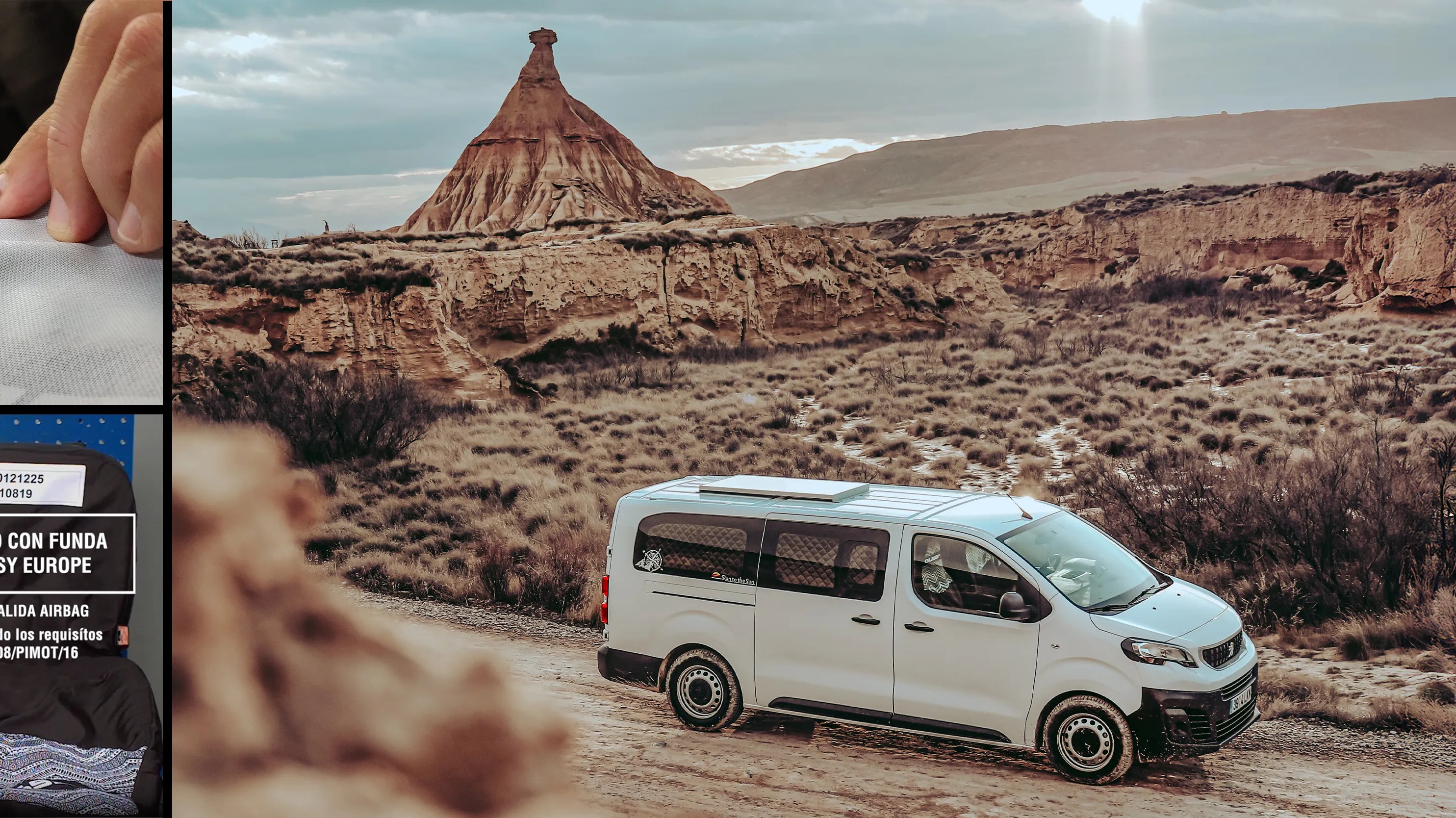
As we have seen earlier in the material features, for our waterproof seat covers we have created a 3-layer fabric that combines the durability of polyester, the waterproofing of PU, and the softness of cotton.
On one hand, an Oxford polyester fabric as the main layer, which is the visible fabric and the one that withstands contact with the user. As we have seen, it is a fabric that does not absorb moisture, thus preventing dirt and is easy to clean since dirt does not adhere to the fabric.
On the other hand, we use PU fabric on the inner side of the main polyester fabric. Its function is to create a waterproof barrier between the cover and the seat. This barrier is waterproof enough to prevent any liquid spilled on the cover from passing through to the seat for hours, but under pressure, some moisture may eventually seep through after a long time. This is because the PU fabric does not create a total waterproof barrier to allow some breathability between the seat and the user.
The third fabric used is an inner polyester coating with a cotton feel, which makes the contact and friction of the cover with the seat soft and does not damage the original seat upholstery.
Besides the main 3-layer fabric used, we use a fabric with elastane, which thanks to its elasticity, fits the different shapes of seats and makes the cover adapt to most camper seats.
If after choosing the material you want to be sure, here I explain why seat protectors are the best option
Here you can find our models.
What type of Vehicle do you have?