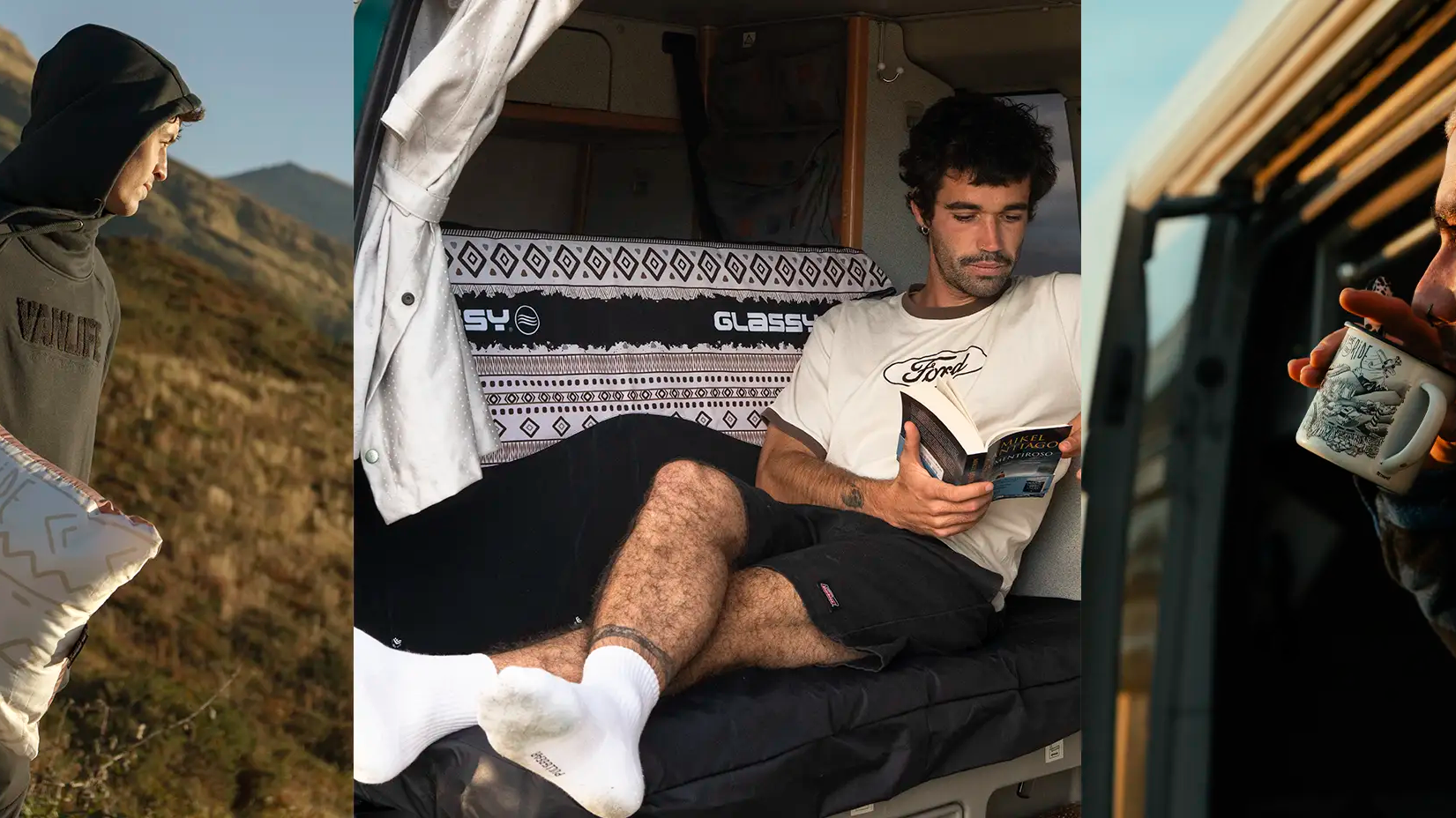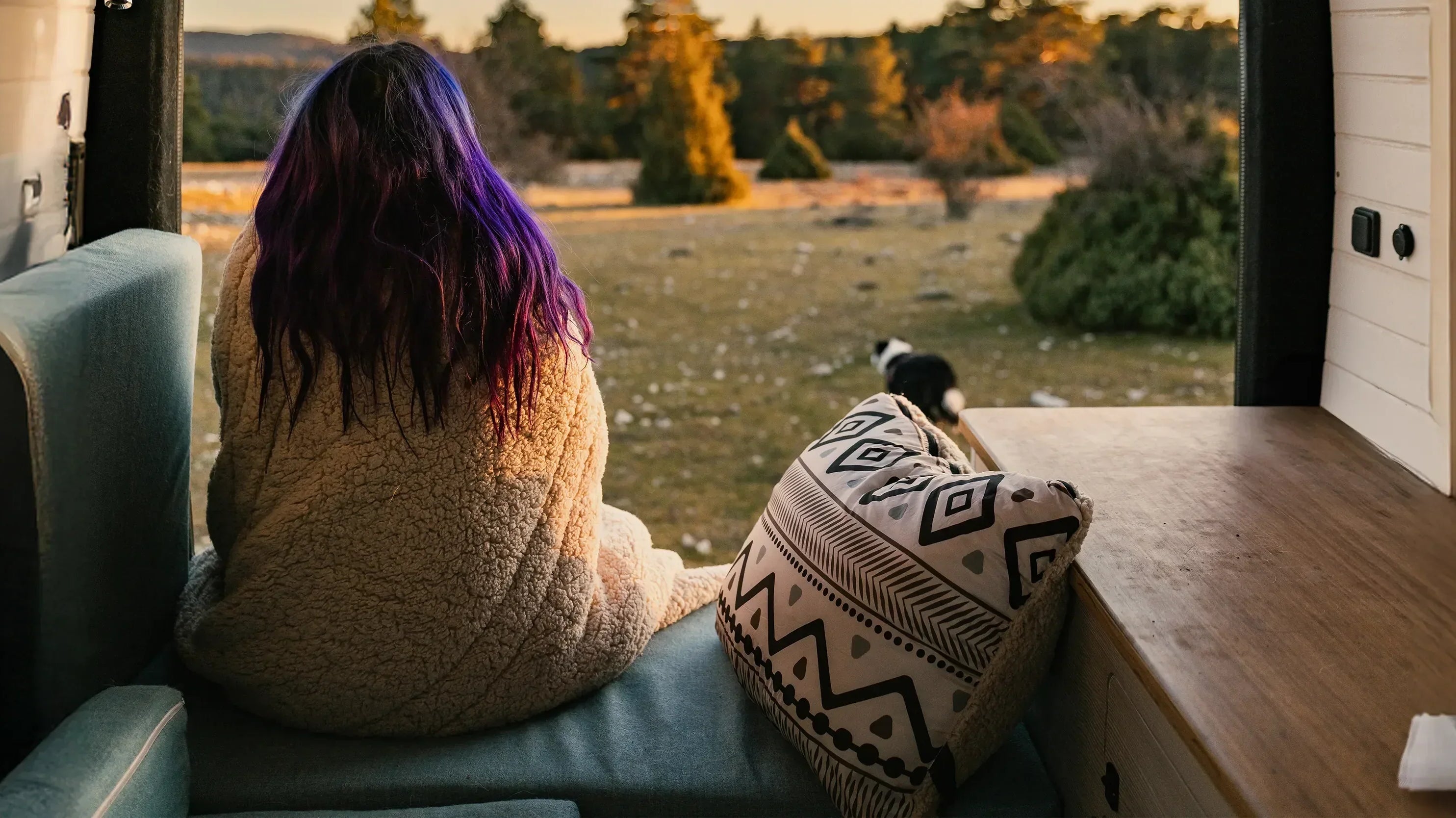
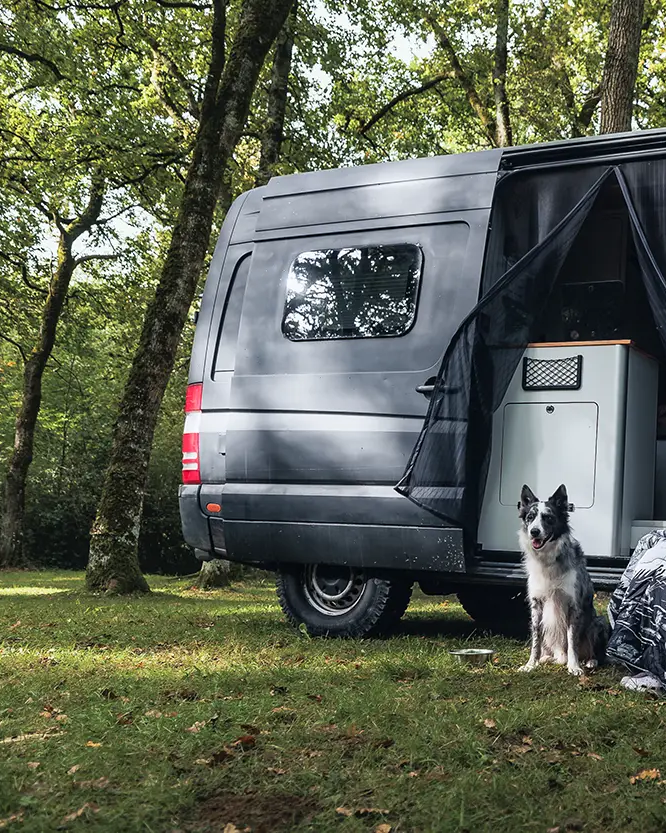
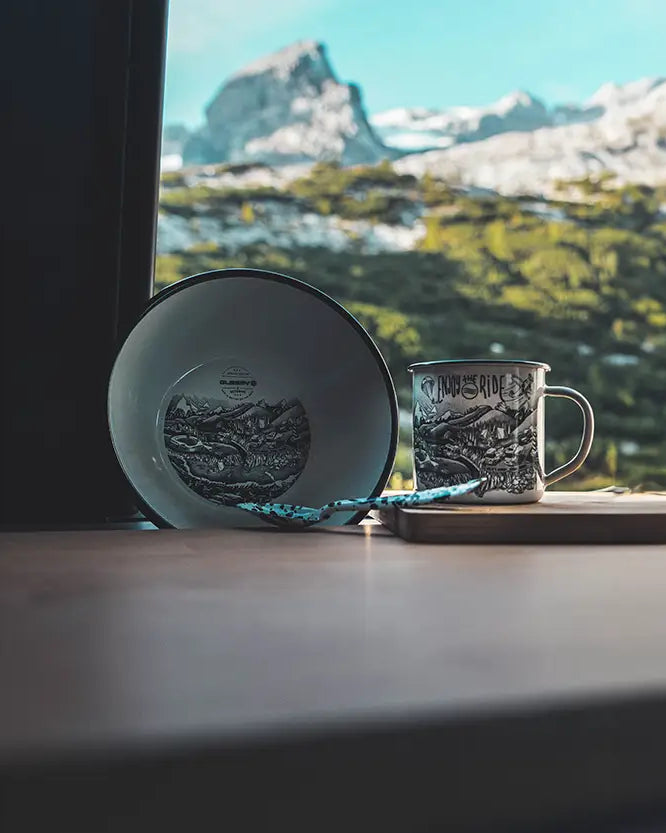




Sleeping in a van is much more than just finding a place to spend the night. It’s living a unique experience of freedom, where the landscape becomes your bedroom and the roof of your van your temporary home.
I remember the first time I stayed overnight in the van. The excitement and inexperience at 25 years old made me, the day after buying the van, put an inflatable mattress inside, some clothes, and my surfboard, only to end up sleeping in the parking lot of a Portuguese beach. At dawn, a strange noise of workers setting something up woke me: I had parked right in the assembly area of the judges’ tower for a surf championship 😅.
In this post, I’ll try to give you the keys, based on my experience, to avoid common mistakes and fully enjoy your first camper getaways.
Basic preparations for sleeping comfortably in your van or camper

To guarantee a good night’s sleep in your camper, the key is to equip yourself properly. These are the things that should never be missing:
- A good mattress or adapted bed: Many campers have seats that convert into beds, but ideally, add a high-density foam mattress to make it more comfortable. Believe me, your back will thank you, especially if you usually go on multi-day trips.
- Camper blankets or suitable sleeping bags: Depending on the time of year, a good camper duvet or thermal sleeping bag is essential. On winter routes, it’s super important to have good quality technical gear to spend the night.
- Functional bedding: Opt for microfiber sheets; they’re warm and take up little space.
- Good ventilation and insulation: An adequate ventilation system, like vents or windows with mosquito nets, is essential especially in summer. Also, thermal insulation on doors and windows will help maintain a stable temperature, whether summer or winter.
Where to sleep in a motorhome or camper: Allowed and safe places

One of the biggest challenges when traveling by van is finding the perfect place to spend the night. The experience of sleeping in a camper van can be magical, but it can also become a headache if you don’t know the legal regulations. In Spain, the key is understanding the difference between overnighting and camping:
- Overnighting: Means sleeping inside the vehicle without setting up exterior elements (tables, chairs, awnings). According to the Instruction 08/V-74 from the Directorate General of Traffic (DGT), this is considered parking and is legal as long as the vehicle is properly parked and does not occupy more space than designated.
- Camping: Involves extending beyond the vehicle, setting up objects outside or generating waste. This is considered wild camping and is prohibited outside designated areas. Restrictions and penalties depend on the specific regulations of each autonomous community or municipality.
Possible problems and penalties:
In popular destinations like the coast of Portugal or northern Spain, control over illegal camping has become stricter in recent years due to tourism overcrowding. Fines can range between 200 and 1,500 euros, depending on local regulations. The Civil Guard or local police may ask you to leave if you are violating the rules.
Although the idea of stopping anywhere is tempting, it’s not always possible or legal, and it’s better to be safe than sorry. These are the best options:
- Service areas for motorhomes: In Spain, there are many areas specifically designed for campers and motorhomes. They are safe, comfortable, and usually have services like water filling and emptying, electricity, and even bathrooms.
- Campgrounds: Although not the cheapest option, campgrounds are the most traditional choice offering peace and facilities like showers, potable water, electricity, and leisure areas. Ideal for those who want to rest without worries.
- Authorized parking or overnight stays in nature: Using apps like Park4Night is a great resource to find places to sleep in your van or camper. Through these traveler communities, you can discover amazing spots (from beaches to mountainous areas), always respecting local rules. Remember to always leave the environment clean, even cleaner than when you arrived.
Practical recommendations:
- Use apps like Park4Night or Campernight to find allowed places and learn from other travelers’ experiences.
- Check the municipal ordinances of the place where you want to overnight, as some cities have specific prohibitions even for parking campers.
- Always respect the environment and avoid leaving any waste. This helps maintain a good atmosphere among travelers and local communities.
🚩 Personal tip: Always verify the legality of overnighting in a place, as in many areas camping outside designated zones is prohibited. A fine or having to leave the site in the middle of the night after a police warning can ruin your night. I say this from personal experience in Portugal, where more than once the GNR arrived at dawn and kindly asked me to leave.
Tips for sleeping better in your camper or van
The quality of your rest can depend on small details. Throughout my travels, I’ve learned some tricks that make a big difference:
- Darken the interior: Use blackout curtains or thermal reflectors to block outside light and maintain privacy.
- Reduce noise: If you’re in a noisy area, like an urban parking lot, good earplugs are essential.
- Organize the space: Keep the van as organized as possible. A clear bed gives a sense of order and comfort.
- Create a relaxing routine: Before going to bed, spend a few minutes relaxing, like reading a book or listening to calm music. This helps disconnect from the day and prepares your mind to sleep better.
✨ Extra tip: A warm light lamp or LED garlands can transform your camper’s atmosphere and make it cozier.
To rest better, equip your van with this top 10 essential camper accessories.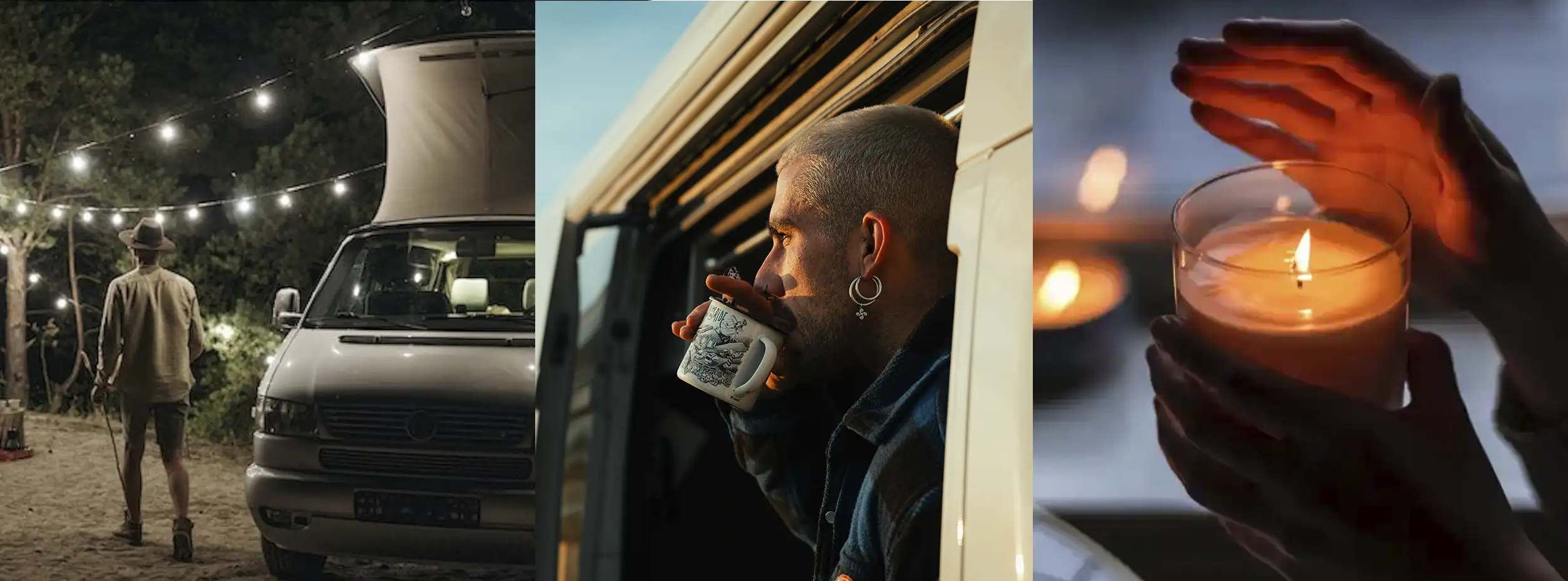
Common mistakes when sleeping in a camper or motorhome (and how to avoid them)
Sleeping in a van isn’t always perfect, especially if you’re a beginner. Here are some mistakes I made at first and how to fix them:
- Underestimating the cold: Nights in the mountains or near water can be freezing, even in summer. Always bring extra warm clothes and a camper blanket just in case.
- Choosing the wrong place to sleep: Once, I stayed overnight in the summer right in the center of Granada. The heat was suffocating, and I had to open the van’s side window. The noise of cars and people’s chatter made it hard to rest for fear someone might throw something inside the van. Since then, I always look for quiet places away from city centers.
- Forgetting to ventilate the van: Condensation can be a problem if you don’t have enough ventilation. Always keep a small opening in a window or door with a mosquito net. Skylights play a fundamental role here.
Advantages and challenges of sleeping in a camper or van
Sleeping in a camper has clear advantages: the freedom to choose where to wake up, the connection with nature, and the comfort of having your "home" with you. However, it also has its challenges, like facing the weather, finding suitable places, or adapting to the limited space.
I remember once, during a route through northern Spain, waking up surrounded by fog and frost on the van’s windows. Although it was cold and my van’s insulation wasn’t perfect, that feeling of being in the heart of nature made up for any discomfort. In the end, overcoming these challenges makes you appreciate this lifestyle even more.
Conclusion: The freedom of sleeping in a camper
Sleeping in a camper, van, or motorhome is not just a way to travel, but a way to live. Each night brings the excitement of a new place and the possibility to connect with the environment in a unique way. Although not everything is perfect and there can be challenges, the advantages of this mobile freedom far outweigh any inconvenience.
So, if you’re thinking about embarking on the adventure, my advice is to go for it.
And before you leave, review what you need for camping and avoid surprises